Commercial mold work follows the same principles as home work, find the moisture, contain, remove, dry, but on a larger scale, with more people in the building and more parties involved. Scope, schedule and who pays should be in writing before work starts. Call the number on this page to be connected with a local mold company in Los Angeles.
What counts as commercial
Commercial work covers offices, stores, restaurants, medical suites, warehouses, schools and multi-unit residential buildings. In Los Angeles, the property is often leased, so a tenant, a landlord and sometimes a property manager each have a stake. A local mold company can walk the space, find where the moisture is coming from and describe what removal would involve.
Common causes in Los Angeles buildings
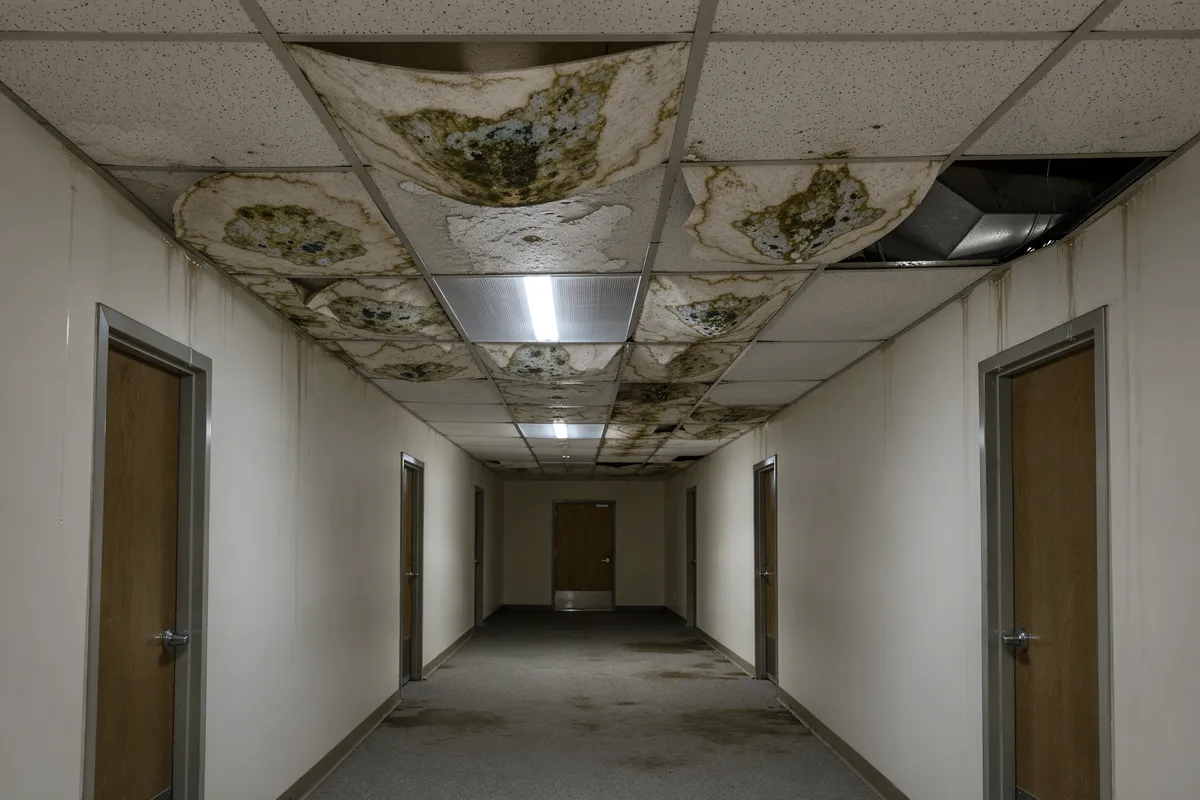
Flat roofs that pond water in winter storms, failing roof drains, leaking rooftop AC units, plumbing in shared walls and ceilings, and kitchen or restroom leaks above suite ceilings are frequent sources. Slab leaks can wet flooring in ground-floor spaces. Restaurants and nail or hair salons have steady humidity. After a pipe burst or a firefighting response, wet ceiling tile and drywall can go moldy if drying is delayed. EPA advises drying water-damaged areas within 24 to 48 hours.
How a commercial job differs
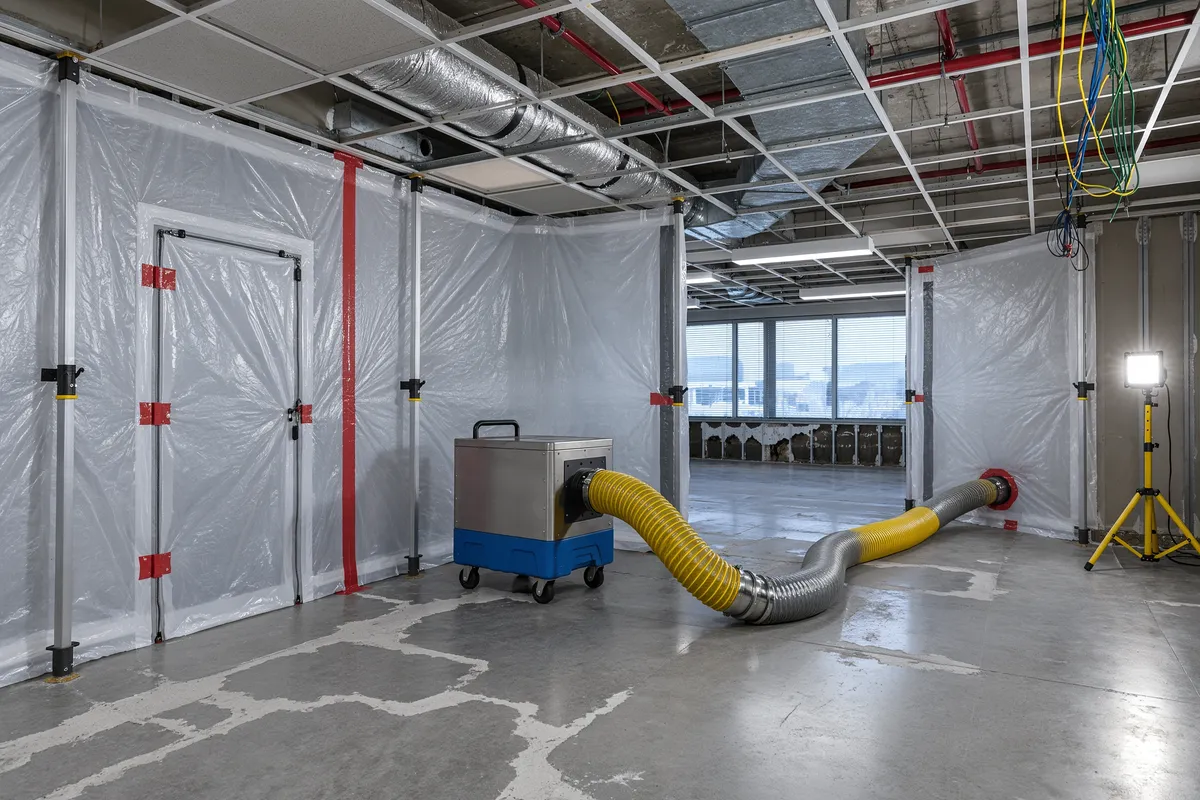
- Containment and phasing. Barriers and negative air keep work areas separate so the rest of the business can keep operating where possible, and work may be scheduled around hours.
- Building systems. Rooftop units, shared ductwork and return air plenums can spread problems between suites.
- Documentation. Photos, moisture readings and a written scope help with insurance, lease questions and later disputes.
- Verification. Owners sometimes ask a separate party to check the work afterward; see post-remediation clearance testing.
Permits, licenses and insurance
California has no state mold license, but anyone contracting for work of $1,000 or more in labor and materials must hold a CSLB license, which you can check on the CSLB site. Repairs that follow removal, such as rebuilding walls or ceilings, may need a building permit; in the City of Los Angeles that office is LADBS, and its guide says to ask before starting. The California Department of Insurance says mold damage from a covered peril may be covered, and advises reporting water damage claims immediately. Business policies differ, so ask your carrier.
Cost
No commercial price range is cited here, and commercial jobs vary with square footage, containment, after-hours work and building systems, so expect a site visit and a written quote. For scale only, a Los Angeles cost guide lists residential remediation at roughly $14 to $27 per square foot. Do not treat that as a commercial price.
Residential buildings
For apartment buildings, state law lists visible mold growth as a substandard condition, with an exception for minor mold on surfaces that normally collect moisture. In the City of Los Angeles, the Los Angeles Housing Department takes rental complaints. If you have health concerns, talk with your doctor.
Commercial Mold Remediation questions from Los Angeles homeowners
Who is responsible for mold in a leased commercial space?
Can the business stay open during remediation?
Does a commercial mold company need a special license?
Will business insurance cover mold?
Related mold services in Los Angeles
Helpful guides
Commercial Mold Remediation in nearby cities and towns
Los Angeles County
Orange County
Ventura County
Sources
- EPA: A Brief Guide to Mold, Moisture and Your Home
- CSLB: What Kind of Contractor Do I Need?
- California Health and Safety Code Section 17920.3
- LADBS Homeowner's Guide to Permits and Inspections
- California Department of Insurance: Residential Property Claims Guide
- Mold Remediation Cost in Los Angeles, California
Last updated: