Who arranges and pays for commercial cleanup often depends on the lease or association documents, so read those first. Call the number on this page to be connected with a local mold company in Studio City.
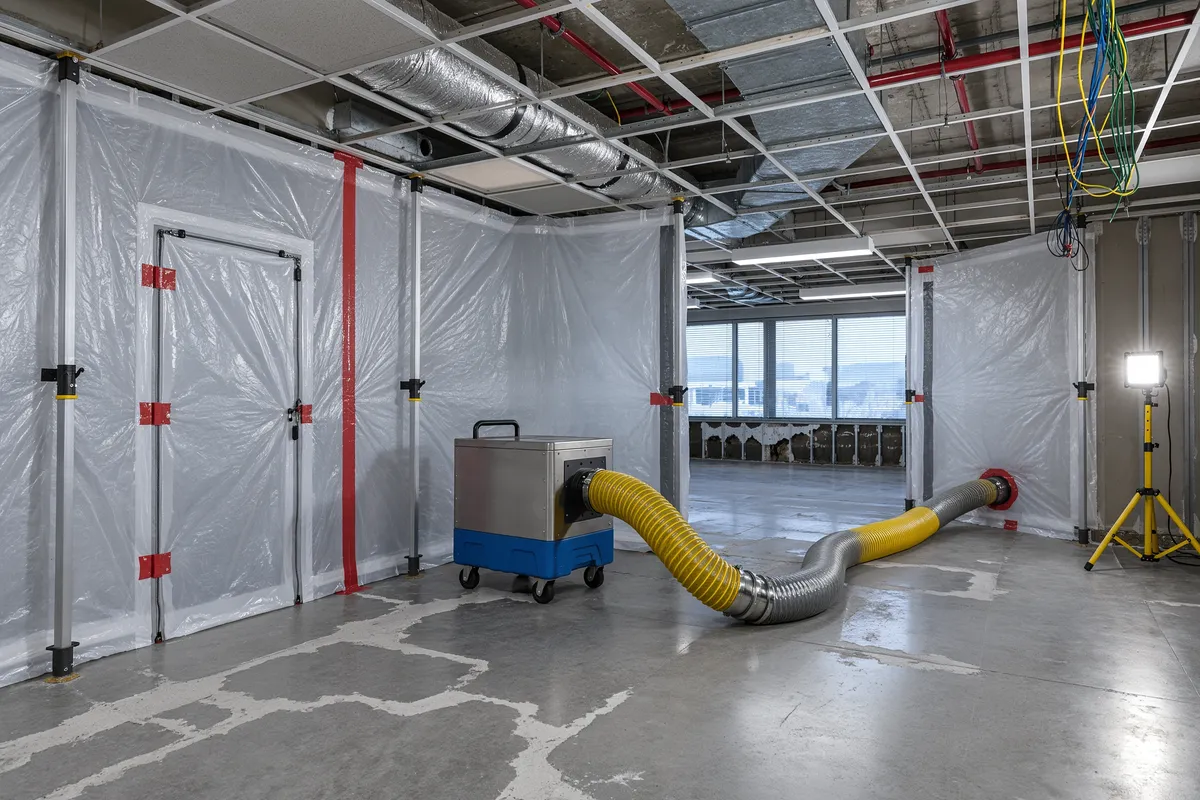
Where commercial mold shows up first
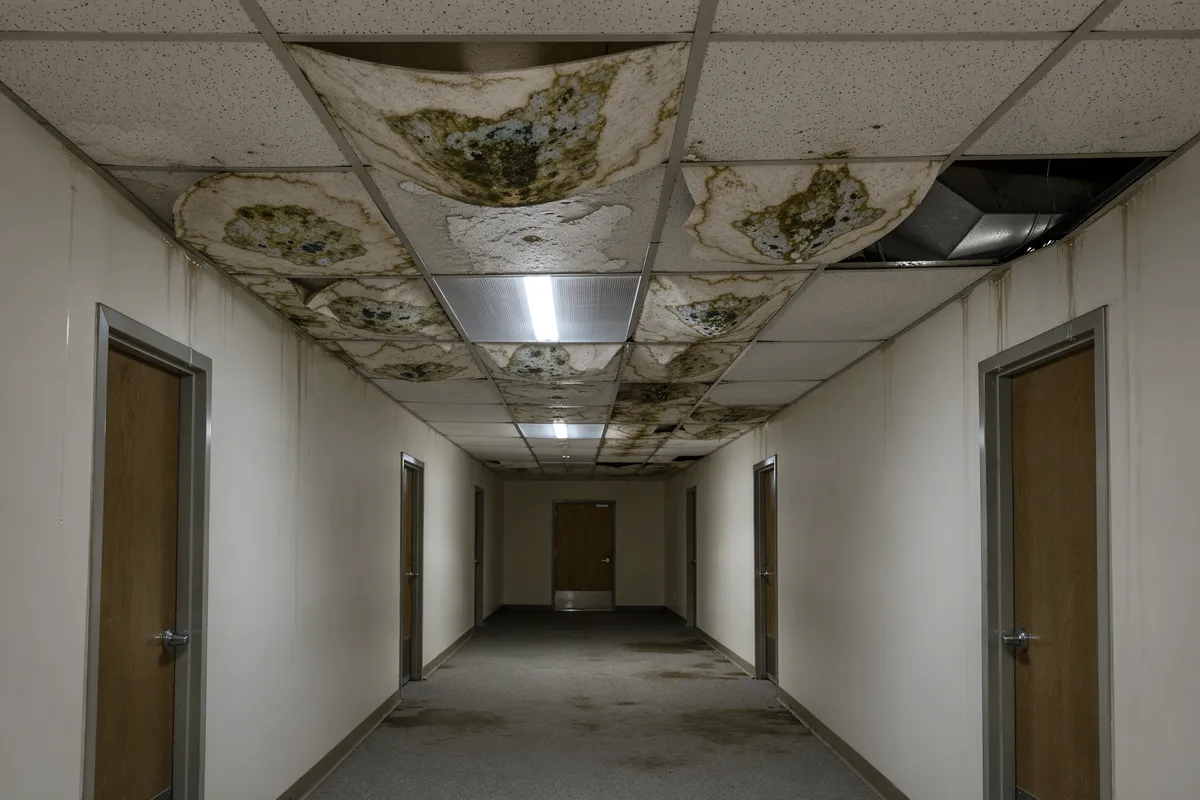
Look at ceiling tiles near rooftop units, the wall behind a restroom, a stockroom corner and the base of storefront glass. Discoloration, buckled baseboard and a sour smell that returns each morning are the usual clues. In a business, they often appear well before anyone files a report. Photograph each spot with a date before anything is moved.
Plumbing risers and shared walls
In multistory buildings, one failed fitting on a riser can wet several floors. Water travels down chases and along the tops of walls, so the damp area can be far from the leak. Tracing it often takes moisture meters and a few small openings rather than a single obvious hole. Roof age and the last time drains were cleared are useful facts to share.
Hillside parcels around Studio City send runoff toward lower buildings. Retaining walls, garages and ground-floor units can take in water after winter storms if site drainage is weak.
Long, hot valley summers keep rooftop AC units running hard, and a clogged condensate line or sweating duct above a ceiling can wet tiles for weeks before anyone notices.
Why quotes do not match
If two proposals differ widely, compare the scope line by line: containment, hours, equipment days, disposal, testing and who restores finishes. The gap usually sits in what is left out, not in a company's hourly rate. Ask each company to explain any line you do not follow. Ask each company to list what is excluded as well as what is included.
Documentation you should receive
A good file includes the written scope, photos before and after, moisture readings, a record of containment and disposal, and the result of any final check. Owners, lenders and insurers frequently ask for these, and tenants may too. Keep them with the building records. Ask for a sample of a past file with names removed.
Before work starts in Studio City
The state of California doesn't license mold remediation as its own trade. The Contractors State License Board does license contractors, and any job priced at $1,000 or more (labor plus materials) calls for that license.
The Los Angeles Department of Building and Safety handles building permits here, so that's the place to check before walls, cabinets or flooring go back in.
For tenants, the Los Angeles Housing Department is the office that takes complaints about substandard rental conditions here; state law counts visible mold growth as one of them.
Companies that take calls here usually also work in North Hollywood, Valley Village and Sherman Oaks.
Planning for the rainy season
In this region, most roof and drain failures show up when the first heavy storms arrive. Owners who schedule inspections of roofs, flashing and site drains beforehand tend to avoid emergency calls. It is worth putting that review on the maintenance calendar every year. Put the roof review on a recurring calendar reminder.
Commercial Mold Remediation questions in Studio City
Who is responsible in a leased commercial space?
What records should an owner keep?
Does the cleanup involve our AC system?
What about mold in an apartment building?
More mold services in Studio City
Commercial Mold Remediation nearby
Helpful guides
Sources
Last updated: