Who arranges and pays for commercial cleanup often depends on the lease or association documents, so read those first. Call the number on this page to be connected with a local mold company in San Gabriel.
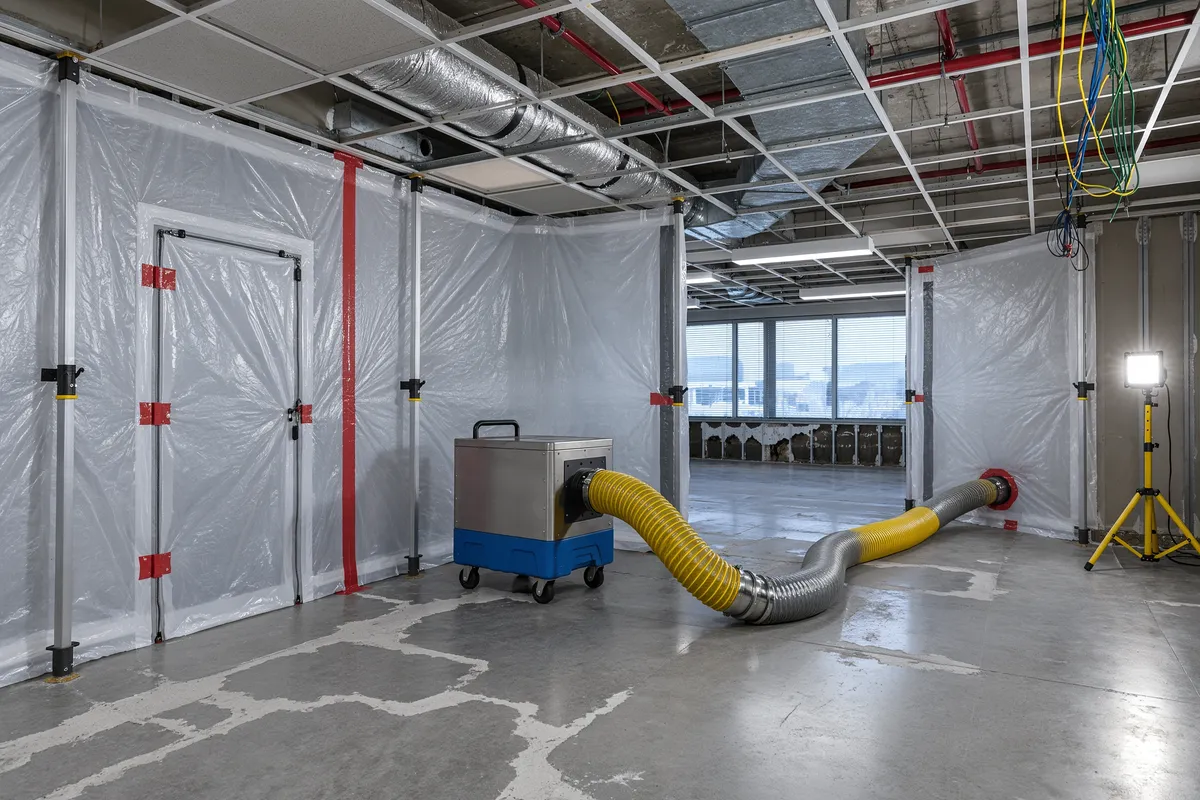
Offices and retail suites
A quiet office can hide a slow leak for months: a pinhole in a supply line above the ceiling, a condensate pan on a rooftop unit, a drain that backs up in heavy rain. Staff often notice a musty odor on Monday mornings after the building has been closed up for the weekend. Check the same spots again after a rainy week to see if they change.
Parking structures and basements
Few buildings here have real basements, but below-grade parking, elevator pits and utility rooms do take in groundwater and runoff. Efflorescence on concrete, damp drywall in a mechanical room and a persistent smell near the garage entrance can all trace to that water. Tell the company which floors are shut at night or on weekends.
Useful local contacts for San Gabriel
Ask any remediation company for its Contractors State License Board number. California has no separate mold license, so the CSLB record is where you confirm a contractor's license for work of $1,000 or more.
Rebuild work after the mold comes out, such as new drywall or framing, may need a permit; the local building department is the office for San Gabriel addresses.
In many Los Angeles County cities, rental mold complaints go to the Los Angeles County Department of Public Health. Your city hall can tell you whether that applies in San Gabriel.
Calls from San Gabriel are often matched with companies that also cover Alhambra, Temple City and Rosemead.
Rebuild is a separate line
Many remediation scopes end once the area is clean and dry; new drywall, ceiling grid, paint and flooring come afterward, often from a different trade. Make sure each quote says whether rebuild is included, so you can compare equal things and budget for the whole job. Ask who will handle ceiling grid, paint and flooring afterward.
Documentation you should receive
A good file includes the written scope, photos before and after, moisture readings, a record of containment and disposal, and the result of any final check. Owners, lenders and insurers frequently ask for these, and tenants may too. Keep them with the building records. Ask for a sample of a past file with names removed.
If water is still coming in
Stop the source if it is safe to do so, move stock and equipment away from wet areas and start drying. EPA advises drying wet materials within 24 to 48 hours. Once that window passes, growth becomes more likely, so call a company and mention exactly when the water event began. Photograph everything before moving stock so insurers see the original condition.
Commercial Mold Remediation questions in San Gabriel
Who is responsible in a leased commercial space?
Do we need an assessor as well?
Should we test the air in our building?
What records should an owner keep?
More mold services in San Gabriel
Commercial Mold Remediation nearby
Helpful guides
Sources
Last updated: