This page is a referral service, not a mold company; each independent company near Burbank explains its own scope and pricing. Call the number on this page to be connected with a local mold company in Burbank.
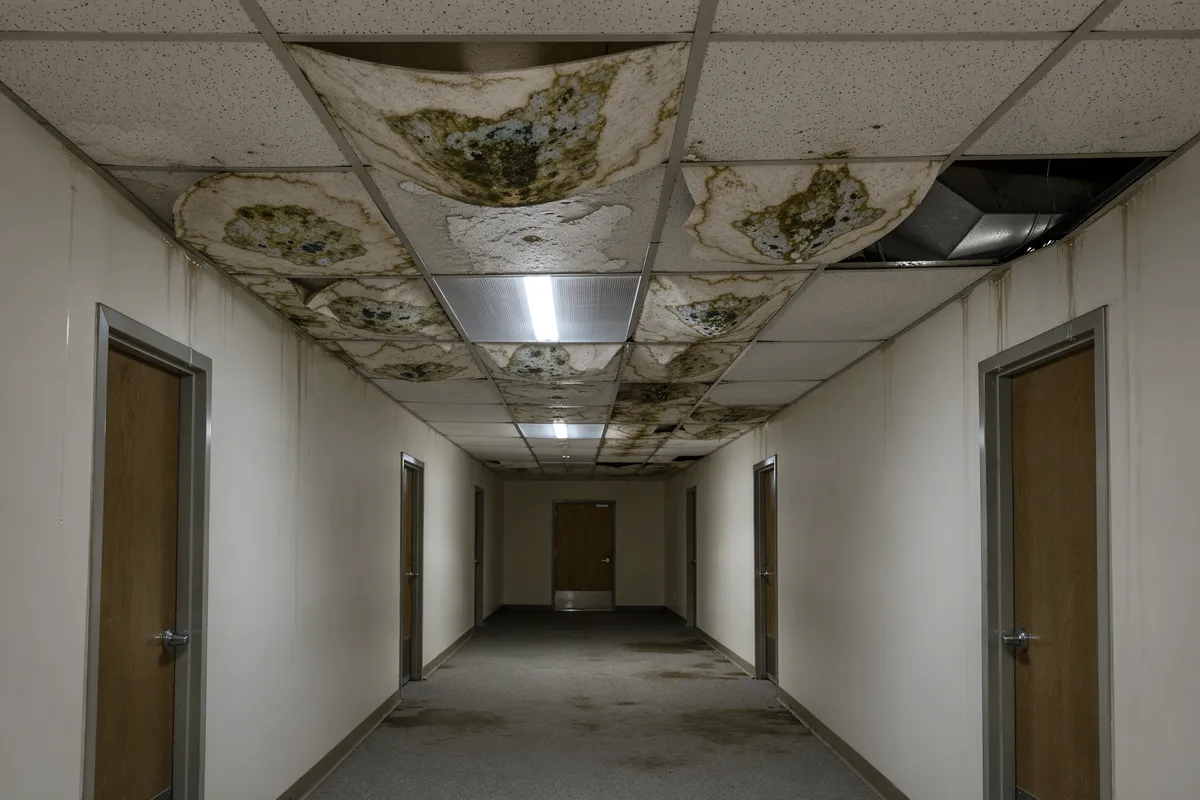
Where commercial mold shows up first
Look at ceiling tiles near rooftop units, the wall behind a restroom, a stockroom corner and the base of storefront glass. Discoloration, buckled baseboard and a sour smell that returns each morning are the usual clues. In a business, they often appear well before anyone files a report. Photograph each spot with a date before anything is moved.
Winter storms and clogged drains
Dry months let leaves, dust and debris build up on roofs and in site drains. When heavy rain finally arrives, water backs up under flashing and around hatches. Buildings in this part of Los Angeles County often discover their leaks all at once after the first big storm. Maintenance logs showing earlier storm leaks help the company look in the right places.
Because many Burbank buildings go back to the 1950s, original pipes and flat roofs are common. Leaks in older mixed-use and apartment properties tend to travel through walls before showing up.
In valley locations like Burbank, commercial cooling equipment works through months of heat. Condensate overflow and attic or plenum moisture are frequent sources of ceiling stains.
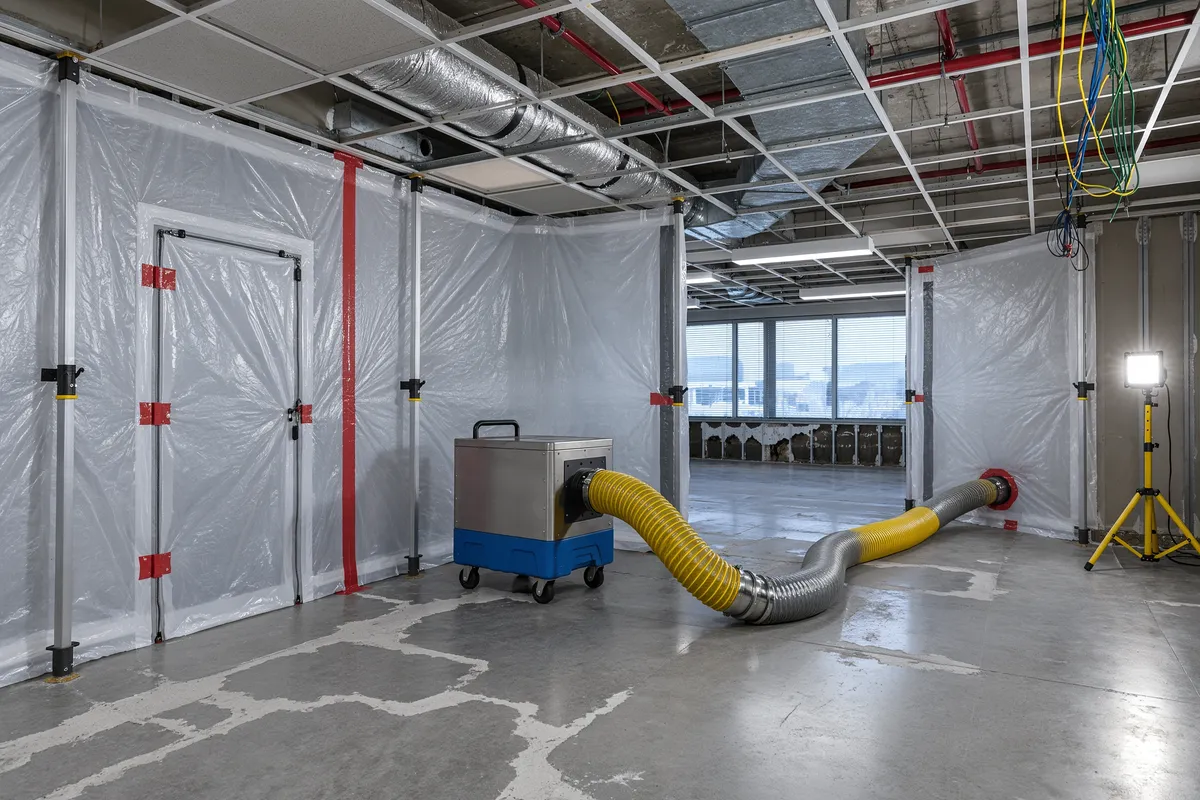
Drying and monitoring
Drying equipment, daily moisture readings and the number of days it must run can make up a sizable part of a commercial job. A scope that leaves out drying or monitoring may look less expensive at first, but it risks reopening walls if readings do not come down. Ask whether readings are logged each day and shared with you.
Who handles what in Burbank
Mold work in California falls under general contractor rules rather than a dedicated mold credential. Once labor and materials reach $1,000, the company needs a CSLB license, and the board's website shows whether it is current.
Rebuild work after the mold comes out, such as new drywall or framing, may need a permit; the City of Burbank Building and Safety Division is the office for Burbank addresses.
Tenants in much of the county report mold and leaks in rentals to the Los Angeles County Department of Public Health; check with the city whether that covers your Burbank address.
Calls from Burbank are often matched with companies that also cover North Hollywood, Sun Valley and Glendale.
Documentation you should receive
A good file includes the written scope, photos before and after, moisture readings, a record of containment and disposal, and the result of any final check. Owners, lenders and insurers frequently ask for these, and tenants may too. Keep them with the building records. Ask for a sample of a past file with names removed.
Humidity and ventilation
EPA suggests keeping indoor humidity below about 60 percent, with 30 to 50 percent a good target. Restrooms, kitchens and storage rooms need working exhaust, and cooling equipment should be sized and maintained so it removes moisture instead of simply chilling the air. Buy a simple humidity meter, since it costs little and tells you a lot.
Commercial Mold Remediation questions in Burbank
Should we test the air in our building?
How fast must a wet area be dried?
What humidity should a business aim for?
Does calling mean we have hired someone?
More mold services in Burbank
Commercial Mold Remediation nearby
Helpful guides
Sources
- City of Burbank Building and Safety Division
- Los Angeles County Department of Public Health Environmental Health: housing complaints
- CSLB: What kind of contractor do you need?
- California Health and Safety Code 17920.3
- EPA: A Brief Guide to Mold, Moisture and Your Home
- California Department of Public Health: Mold
- Burbank housing by year built
Last updated: