Firefighting water can soak walls and attic insulation that flames never touched, so fast drying and a growth check matter. Call the number on this page to be connected with a local mold company in Burbank.
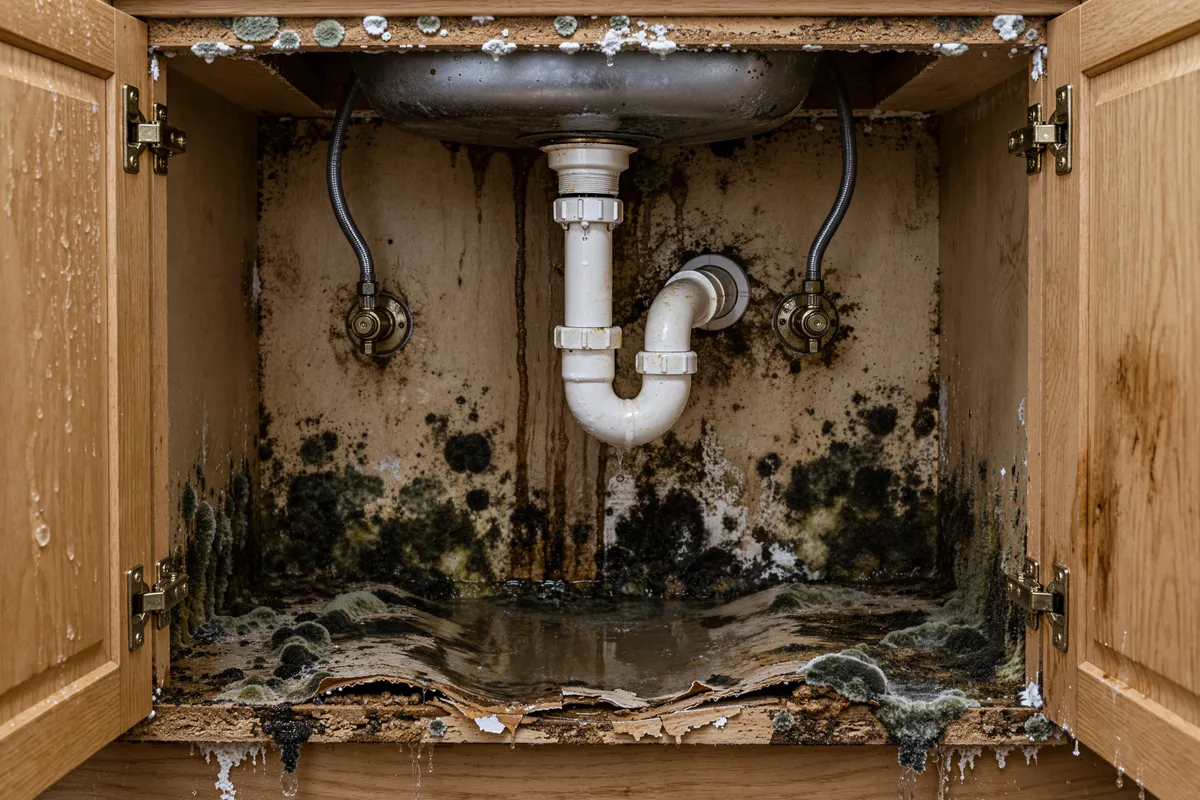
What Not to Do
Avoid heating a wet wall with space heaters alone, sealing damp areas with paint or new flooring, or running the AC through a damp section of the house. Those steps can spread moisture or lock it in. Drying works best when someone measures it. Rushing to rebuild before drying is finished is the most common mistake.
Drainage Problems
Clogged gutters, a cracked drain line or a failing sump pump area can send water to the foundation. Raised-foundation homes collect it in the crawl space, while slab houses wick it into the base of walls. Fixing drainage prevents repeat damage. Water against a wall for even a few days can wet it through.
Much of the housing in Burbank dates to the 1950s. Older galvanized or copper lines, aging roofs and original water heaters mean leaks are more likely to sneak up on owners.
Valley summers keep AC systems running for months, and attic air handlers and drain lines can overflow or sweat onto ceilings, a leak source often mistaken for a roof problem.
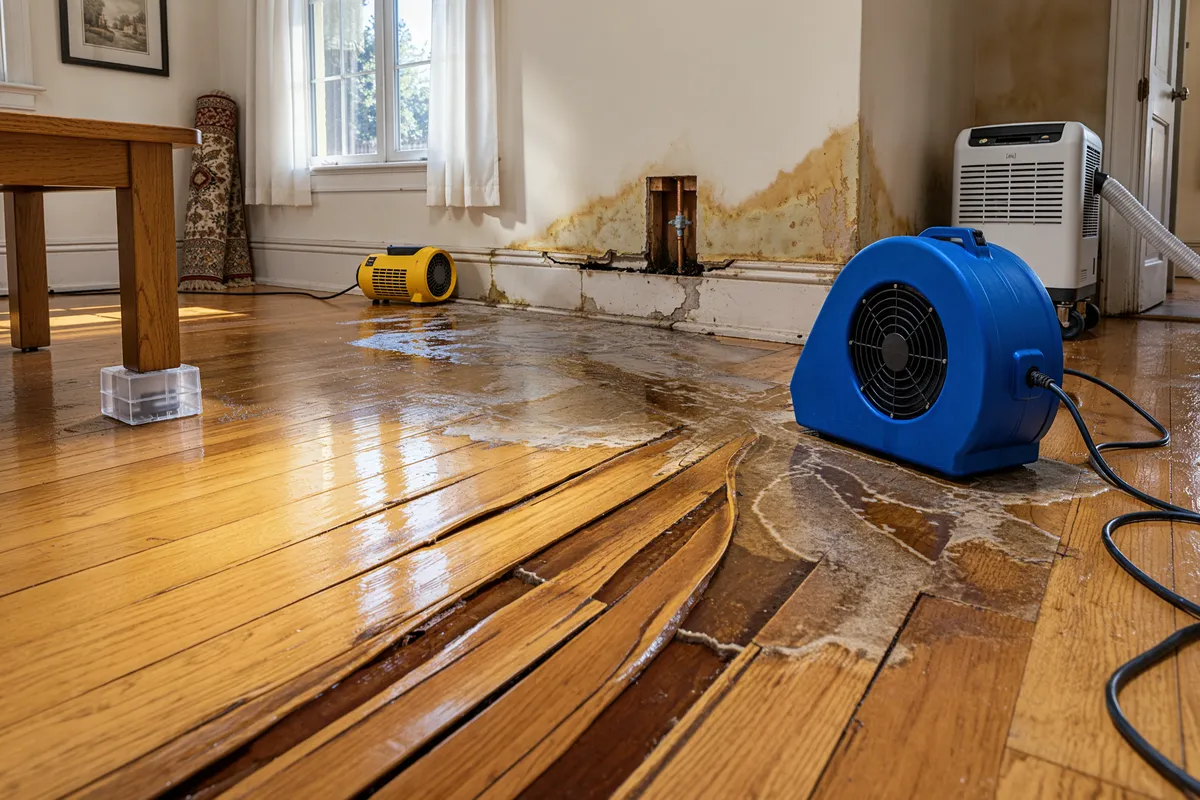
Access and Containment
Working under a slab-adjacent floor, in a crawl space or in a ceiling cavity takes more labor and more protection for the rest of the house. Larger or hard-to-reach jobs usually need containment and air filtration, which adds to the scope. Tight spaces and ceilings add labor, even for small areas.
Local details for Burbank
No state agency here issues mold-specific credentials. Hiring for a bigger job? Look up the contractor's license number with the Contractors State License Board; jobs at or above $1,000 require one.
Remediation itself is cleanup, but putting the room back together can be permitted work; ask the contractor whether the City of Burbank Building and Safety Division needs to be involved.
Renting? The Los Angeles County Department of Public Health takes housing complaints, including mold, in cities that have adopted the County Health Code; the city can confirm who handles Burbank addresses.
Calls from Burbank are often matched with companies that also cover North Hollywood, Sun Valley and Glendale.
The Assessment
Expect the company to look at the source, check moisture readings through the affected rooms, and ask when the water started. Written notes on the extent of the wet area and the materials involved should come out of that visit, along with the proposed scope. Request a copy of the moisture log at the end of the job.
Water Heaters and Appliance Hoses
Replace aging braided hoses, add a drain pan under the water heater and consider leak detectors near high-risk spots. An alert at the first drip is easier than a repair after weeks of hidden wetting, and some detectors can shut off supply automatically. A basic sensor works fine as long as it has a loud alarm.
Around Burbank
Calls come in from across Burbank, including around Magnolia Park, Rancho Equestrian District, Downtown Burbank.
Median home built in 1958 and about 57.2% of occupied units are renter-occupied.
Leak & Water Damage Mold Removal questions in Burbank
Fix the leak first or call a mold company first?
Will insurance pay for mold after a burst pipe?
Can I run fans and dehumidifiers myself?
Does coastal fog slow drying?
More mold services in Burbank
Leak & Water Damage Mold Removal nearby
Helpful guides
Sources
- City of Burbank Building and Safety Division
- Los Angeles County Department of Public Health Environmental Health: housing complaints
- CSLB: What kind of contractor do you need?
- California Health and Safety Code 17920.3
- EPA: A Brief Guide to Mold, Moisture and Your Home
- California Department of Public Health: Mold
- Burbank housing by year built
Last updated: