EPA advises drying wet materials within 24 to 48 hours, which applies to a stockroom as much as a living room. Call the number on this page to be connected with a local mold company in San Dimas.
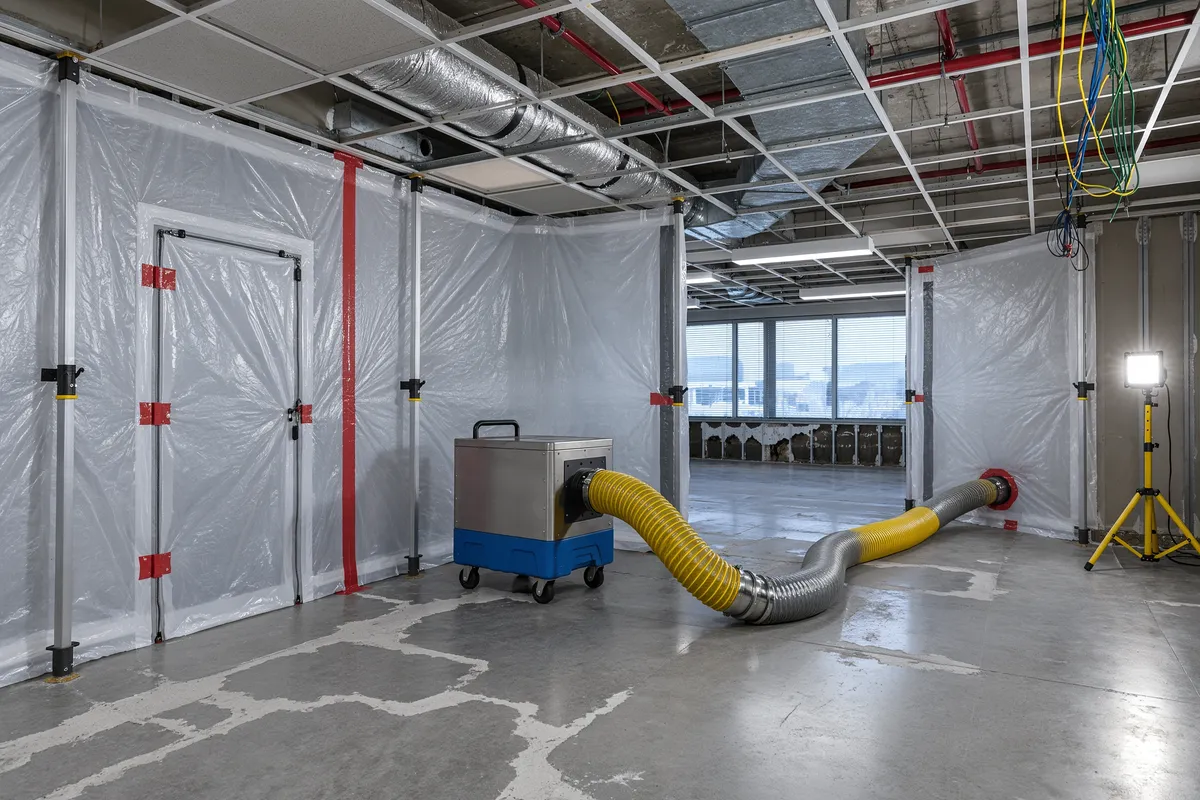
Where commercial mold shows up first
Look at ceiling tiles near rooftop units, the wall behind a restroom, a stockroom corner and the base of storefront glass. Discoloration, buckled baseboard and a sour smell that returns each morning are the usual clues. In a business, they often appear well before anyone files a report. Photograph each spot with a date before anything is moved.
Parking structures and basements
Few buildings here have real basements, but below-grade parking, elevator pits and utility rooms do take in groundwater and runoff. Efflorescence on concrete, damp drywall in a mechanical room and a persistent smell near the garage entrance can all trace to that water. Tell the company which floors are shut at night or on weekends.
Canyon and slope sites in San Dimas often have lower-level suites that sit against retained soil. Persistent dampness there can point to drainage behind the wall rather than a plumbing leak.
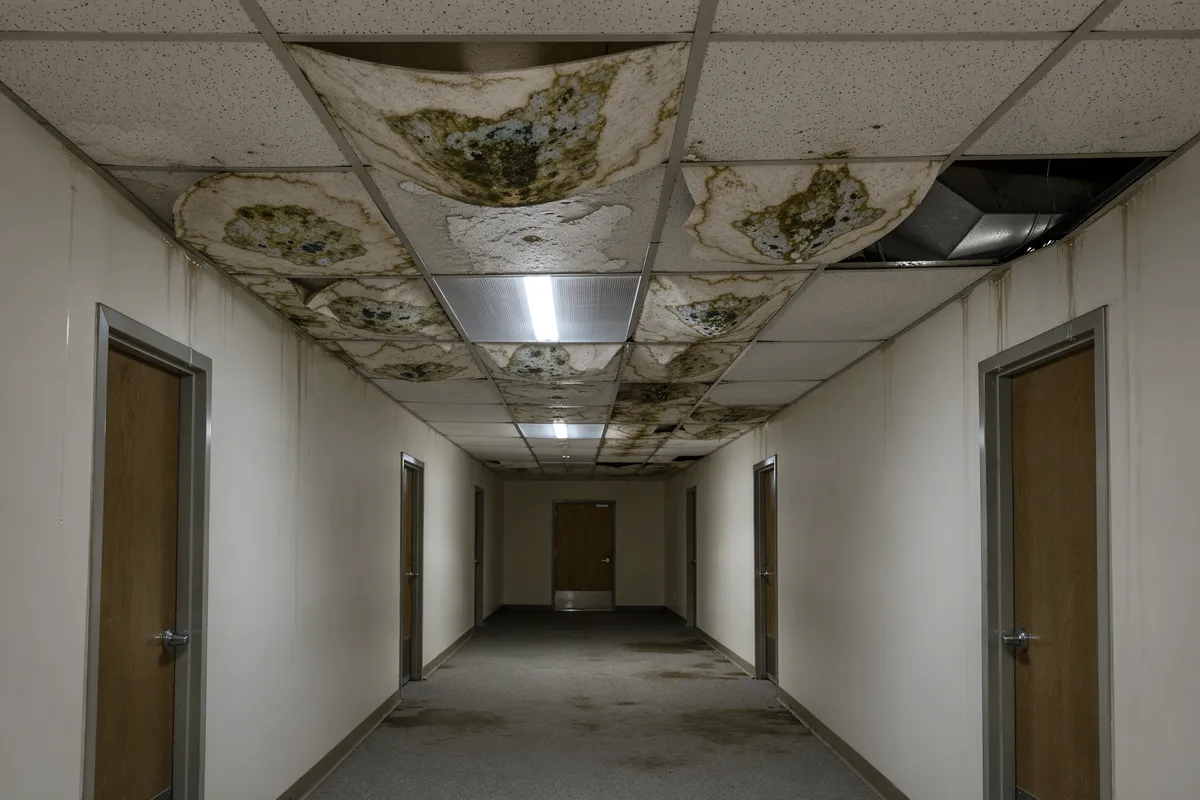
Before work starts in San Dimas
Ask any remediation company for its Contractors State License Board number. California has no separate mold license, so the CSLB record is where you confirm a contractor's license for work of $1,000 or more.
The local building department handles building permits here, so that's the place to check before walls, cabinets or flooring go back in.
Tenants in much of the county report mold and leaks in rentals to the Los Angeles County Department of Public Health; check with the city whether that covers your San Dimas address.
Nearby, the same kind of help is available in Covina, Glendora and Pomona.
Drying and monitoring
Drying equipment, daily moisture readings and the number of days it must run can make up a sizable part of a commercial job. A scope that leaves out drying or monitoring may look less expensive at first, but it risks reopening walls if readings do not come down. Ask whether readings are logged each day and shared with you.
Notices to tenants and staff
People in the building deserve a simple explanation: where the work is, how long it is expected to last and who to call with concerns. If anyone has health questions, suggest they speak with their doctor. Property managers often post a brief notice before work starts. Give the company the number of someone who can answer quickly.
When to call without delay
Call promptly if you see growth across a large area, a wet ceiling that keeps spreading, water in an AC plenum or mold after sewage or storm water. For fire, structural or electrical hazards, contact emergency services first, then arrange cleanup once the building is safe. Keep the building owner and the insurer informed as you go.
Commercial Mold Remediation questions in San Dimas
Do we need an assessor as well?
Does the cleanup involve our AC system?
Can staff clean a small area?
What if a company only treats the surface?
More mold services in San Dimas
Commercial Mold Remediation nearby
Helpful guides
Sources
Last updated: