This page is a referral service, not a mold company; each independent company near West Hills explains its own scope and pricing. Call the number on this page to be connected with a local mold company in West Hills.
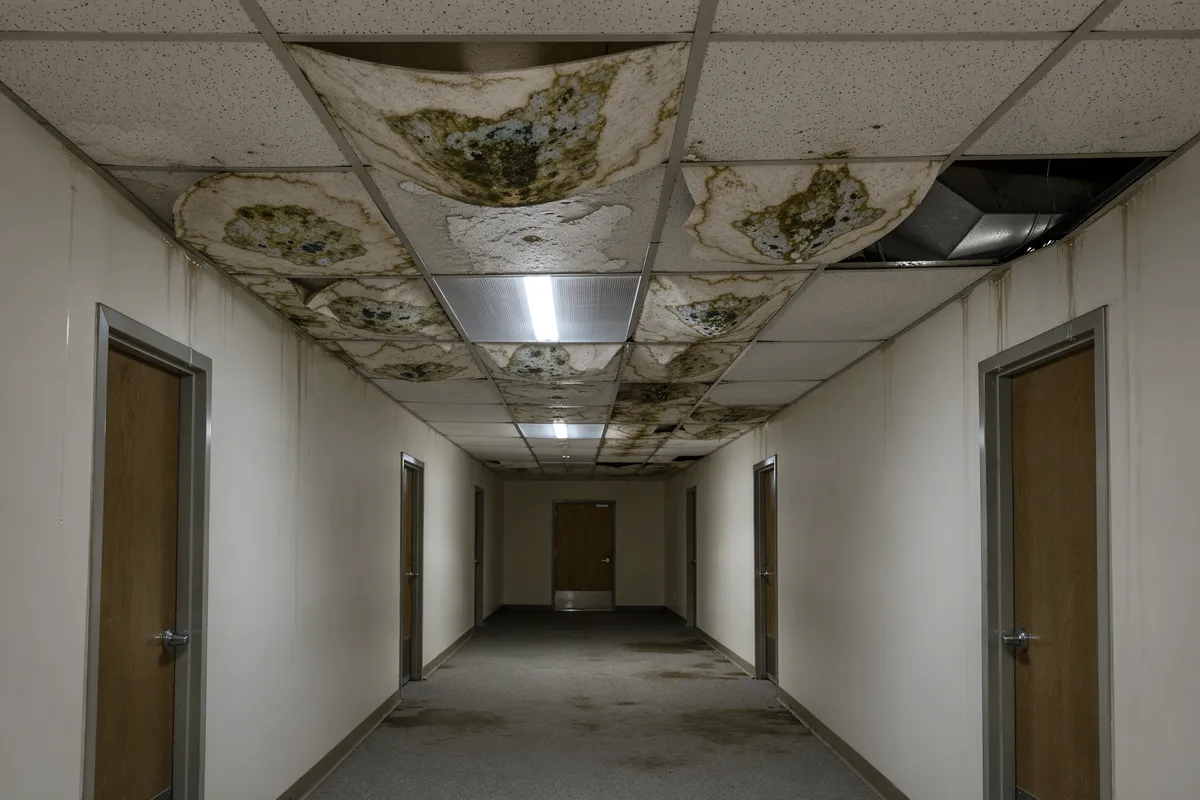
Signs in an apartment or condo building
- Stained ceilings in the unit below a bathroom
- A musty stairwell or laundry room
- Bubbled paint along exterior walls
- Complaints from several units on the same riser
When more than one household reports the same thing, the source is probably shared plumbing or roofing. Keep a short log of which units report it and when.
Water used to fight fire or flood
After a fire in a neighboring unit or a burst pipe upstairs, wet insulation and drywall can remain hidden inside walls. Even if the visible area dries, the cavity may not. A moisture check before the repair crew closes things up is a sensible step. Records of what was burned, flooded or repaired belong in the file.
Canyon and slope sites in West Hills often have lower-level suites that sit against retained soil. Persistent dampness there can point to drainage behind the wall rather than a plumbing leak.
In valley locations like West Hills, commercial cooling equipment works through months of heat. Condensate overflow and attic or plenum moisture are frequent sources of ceiling stains.
Who handles what in West Hills
No state agency here issues mold-specific credentials. Hiring for a bigger job? Look up the contractor's license number with the Contractors State License Board; jobs at or above $1,000 require one.
If the job grows into replacing drywall, cabinets or framing, ask whether the rebuild needs a permit from the Los Angeles Department of Building and Safety.
For tenants, the Los Angeles Housing Department is the office that takes complaints about substandard rental conditions here; state law counts visible mold growth as one of them.
Companies that take calls here usually also work in Canoga Park, Oak Park and Woodland Hills.
Drying and monitoring
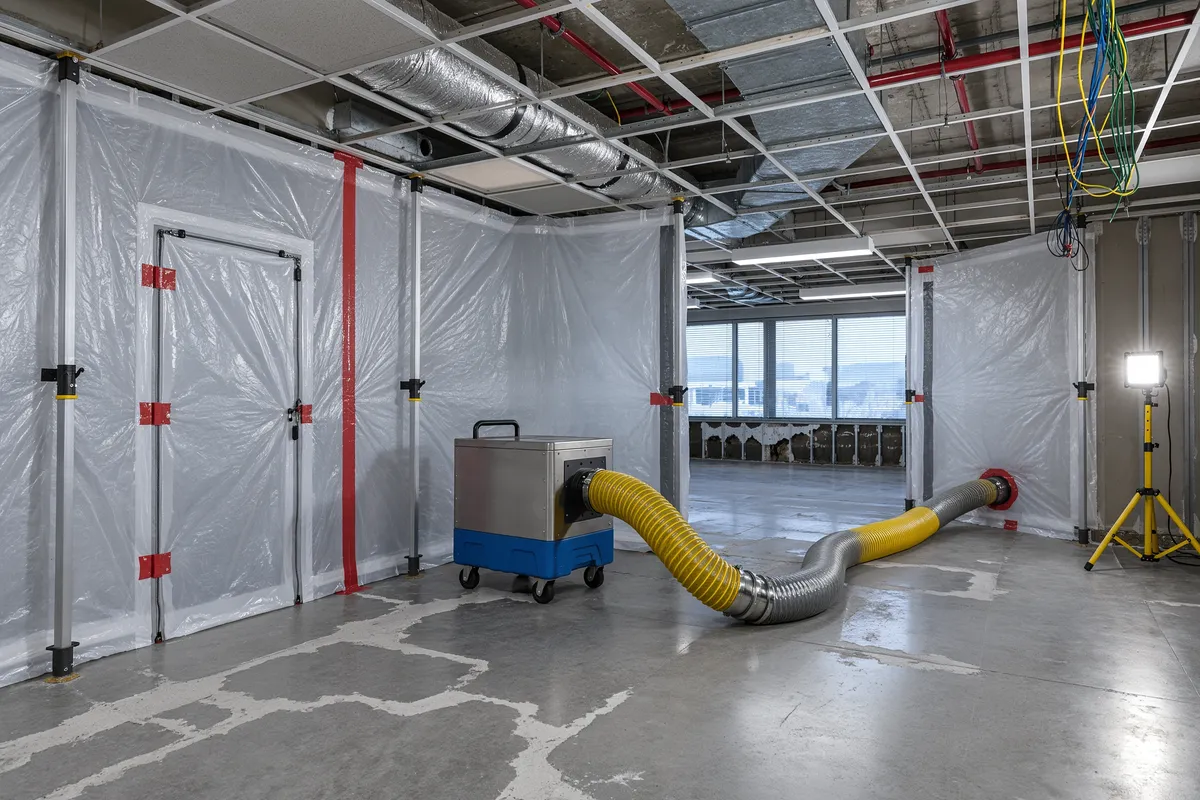
Drying equipment, daily moisture readings and the number of days it must run can make up a sizable part of a commercial job. A scope that leaves out drying or monitoring may look less expensive at first, but it risks reopening walls if readings do not come down. Ask whether readings are logged each day and shared with you.
What the company will want to know
Expect questions about the building type, the affected area, the source of the water, whether it is occupied and how soon the space is needed. Floor plans, photos and any earlier moisture reports speed things up. A rough answer is better than waiting until you have a perfect one. Share the layout, since doors and corridors decide where barriers go.
If water is still coming in
Stop the source if it is safe to do so, move stock and equipment away from wet areas and start drying. EPA advises drying wet materials within 24 to 48 hours. Once that window passes, growth becomes more likely, so call a company and mention exactly when the water event began. Photograph everything before moving stock so insurers see the original condition.
Commercial Mold Remediation questions in West Hills
Who is responsible in a leased commercial space?
How fast must a wet area be dried?
What records should an owner keep?
Can staff clean a small area?
More mold services in West Hills
Commercial Mold Remediation nearby
Helpful guides
Sources
Last updated: