Porous materials that stay moldy, like drywall and insulation, usually come out. Framing can often be cleaned and dried in place. Call the number on this page to be connected with a local mold company in Santa Monica.
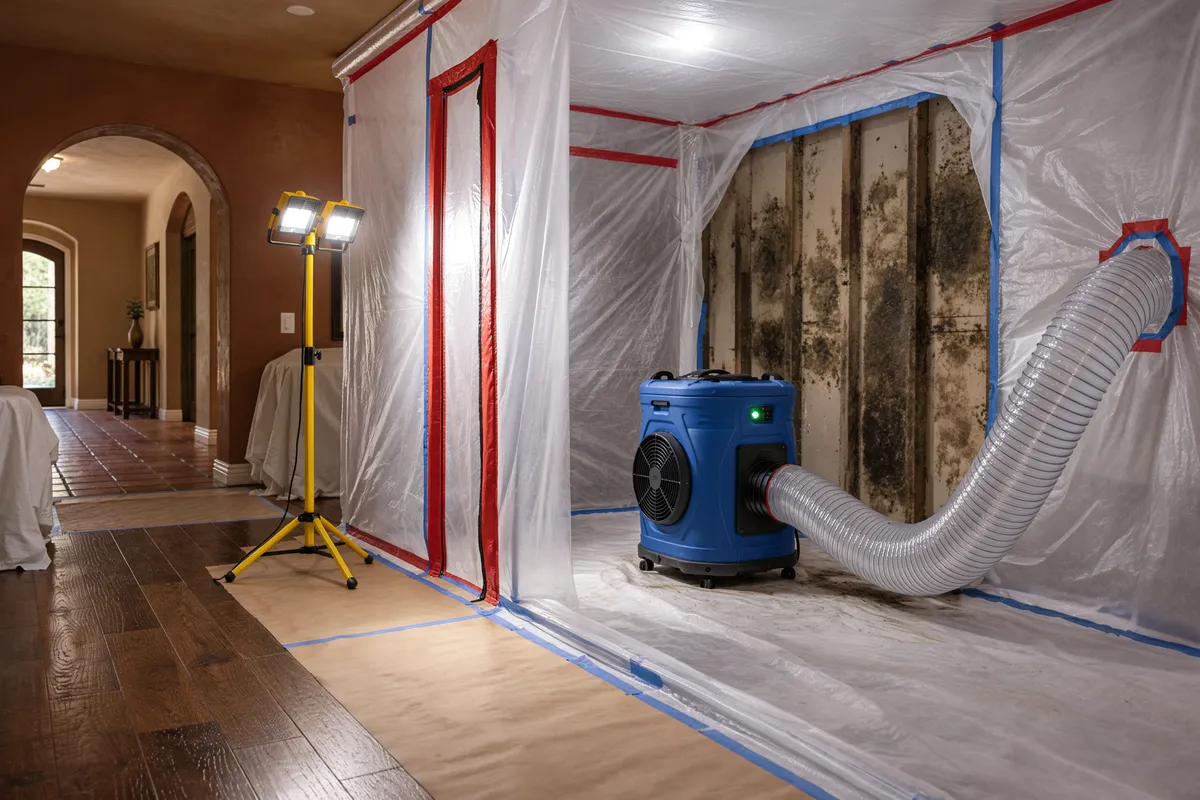
Is it time to call a professional?
Ask yourself three things. Is the area larger than about 10 square feet? Is it in a wall cavity, attic or crawl space you cannot fully see? Did the water come from a sewage or contaminated source? A yes to any one means a trained crew should handle the work.
Where the moisture comes from here
Southern California is dry most of the year, so mold almost always traces to a specific water source: a pinhole leak in a copper line, a slow drip under a sink, a failed shower pan or a roof leak after winter rain. Find the source and you find the mold.
Ocean air and cool overnight temperatures create window and wall condensation in beach-area homes, and a company working here will look at humidity as well as leaks.
With homes here built in the 1960s, remediation crews often open walls to find rotted sill plates, tired supply lines or old stucco cracks that let water reach the framing.
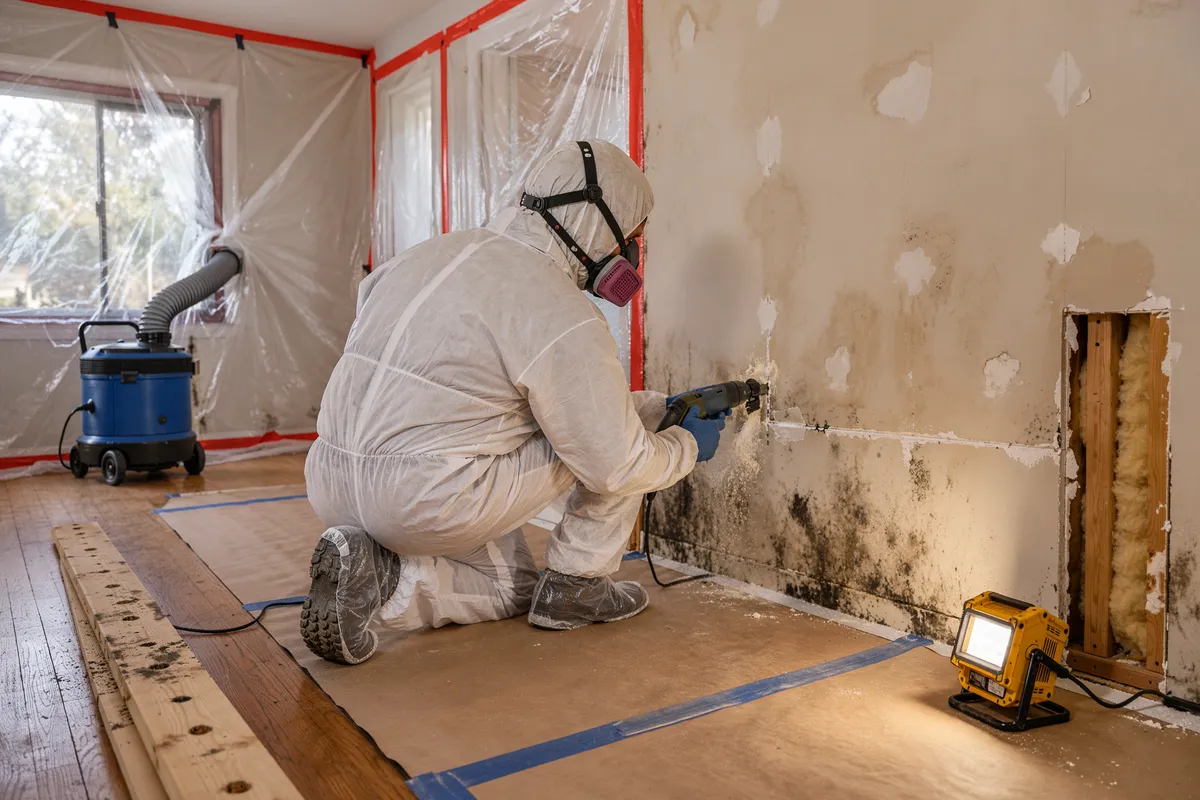
Day by day, roughly
Setup and containment usually fill the first visit. Removal and cleaning follow, then drying equipment stays for a few days. Rebuilding such as drywall, paint and flooring is often a separate step, sometimes done by a different contractor. Your schedule will shift if a hidden problem turns up once the wall is opened.
Why two quotes can look far apart
One company may price only the removal while another bundles drying, a clearance step and reconstruction. Compare scopes line by line. A lower number that leaves out drying or disposal usually costs more later. Ask each company to describe what happens if the work reveals more damage than expected.
Who handles what in Santa Monica
Ask any remediation company for its Contractors State License Board number. California has no separate mold license, so the CSLB record is where you confirm a contractor's license for work of $1,000 or more.
The City of Santa Monica Building and Safety Division handles building permits here, so that's the place to check before walls, cabinets or flooring go back in.
For tenants, the City of Santa Monica Building and Safety Division is the office that takes complaints about substandard rental conditions here; state law counts visible mold growth as one of them.
Calls from Santa Monica are often matched with companies that also cover Venice, Marina Del Rey and Playa Vista.
Drainage outside matters as much as plumbing inside
Irrigation spray hitting stucco, downspouts dumping at the foundation and soil piled against siding all send moisture toward the house. Redirect water away and the interior has a better chance of staying dry. Even a modest change, such as moving sprinkler heads away from the wall, can make a real difference.
More about Santa Monica
Calls come in from across Santa Monica, including around Downtown Santa Monica, Main Street, Montana Avenue.
71.2% of occupied housing units are renter-occupied; median year built 1967.
Mold Removal & Remediation questions in Santa Monica
What does remediation involve?
Does California require a mold license?
Will insurance cover mold removal?
Does coastal fog cause indoor mold?
More mold services in Santa Monica
Mold Removal & Remediation nearby
Helpful guides
Sources
- City of Santa Monica Building and Safety Division
- City of Santa Monica Building and Safety Division: housing complaints
- CSLB: What kind of contractor do you need?
- California Health and Safety Code 17920.3
- EPA: A Brief Guide to Mold, Moisture and Your Home
- California Department of Public Health: Mold
- Santa Monica housing by year built
Last updated: