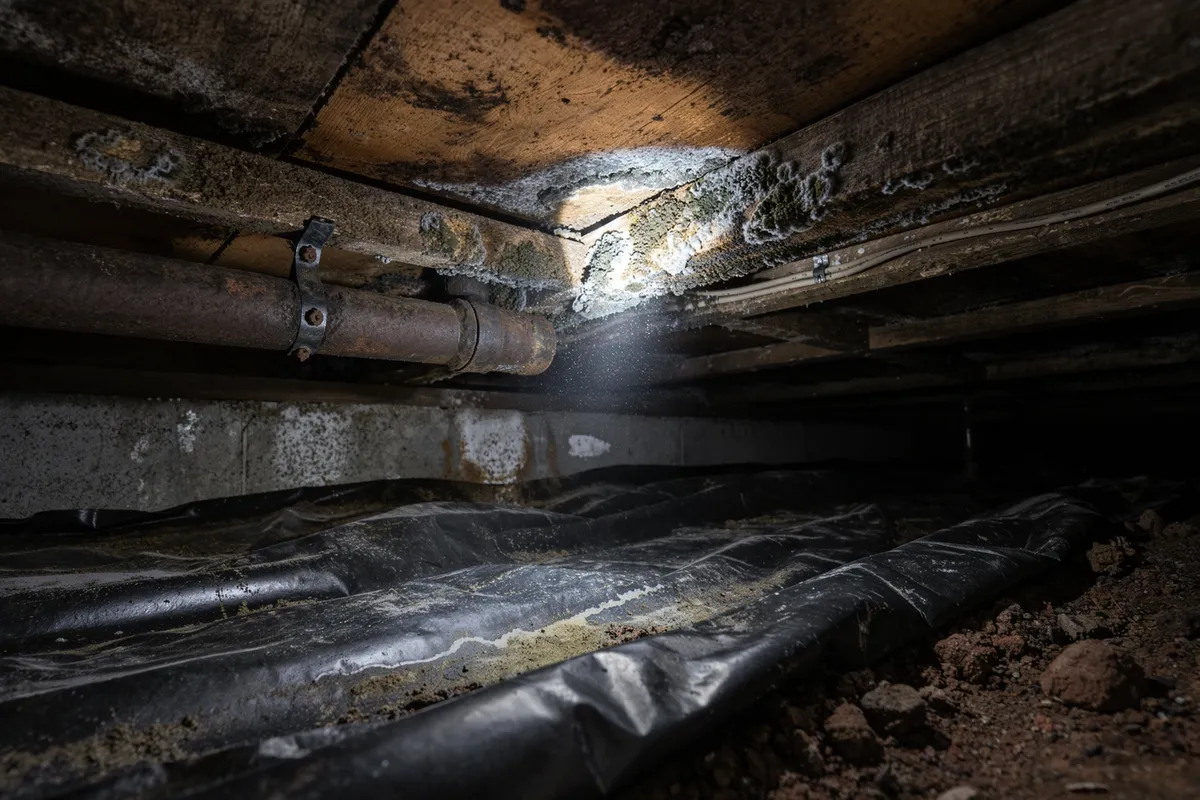
Raised-foundation homes in Southern California often have crawl spaces that stay damp near leaking pipes, poor drainage or covered vents. A local company checks the subfloor, joists, insulation and soil before deciding what to clean and what to replace. Call the number on this page to be connected with a local mold company in Santa Monica.
Signs from inside the house
You rarely see a crawl space or attic, so look for clues in the living space. A musty smell near floor vents, cold or springy floors, a stain on a ceiling below the attic, or condensation on the roof side of a closet all point to a damp space above or below.
Insulation that holds water
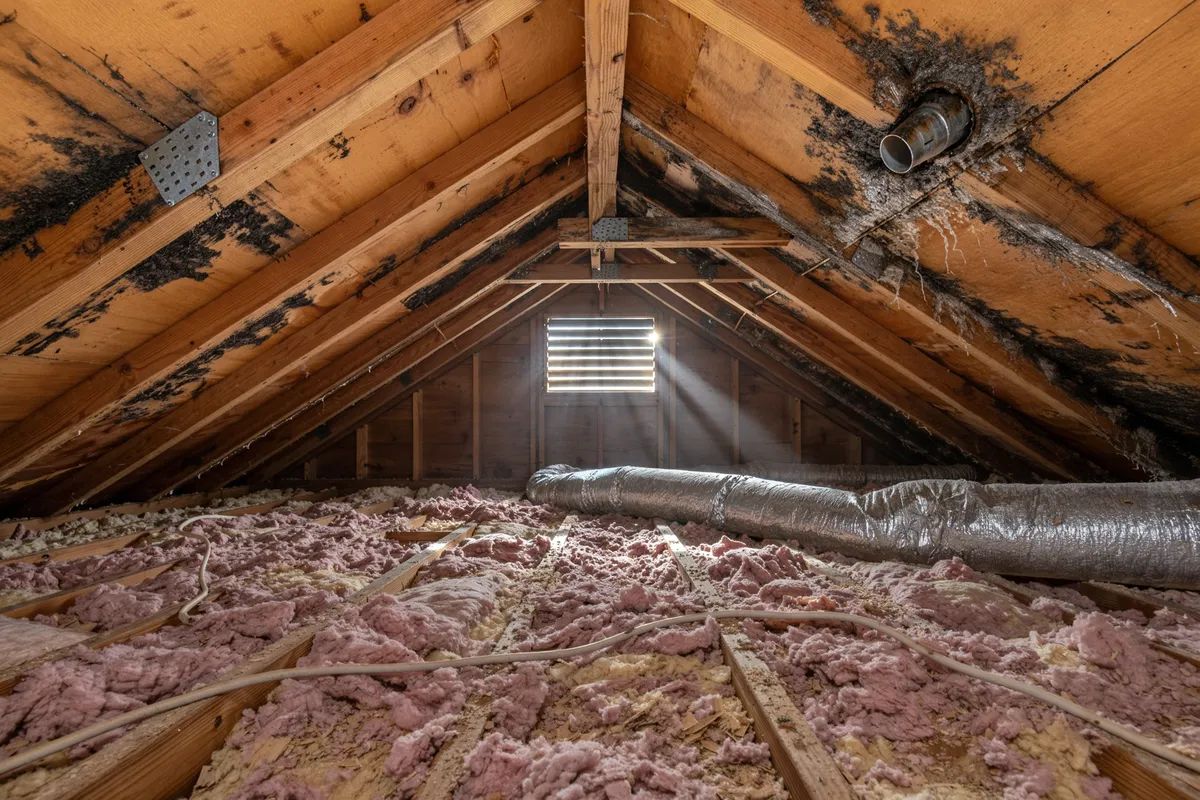
Fiberglass batts under the floor or over the ceiling hold moisture once they are wet and press it against wood. Sagging, stained or fallen insulation in either space often marks where water has been, and it frequently needs replacing as part of the work. Pressed against joists, wet batts keep the wood damp.
Much of Santa Monica's housing dates to the 1960s, and many of those homes sit on raised wood foundations with older pipes and vents that can leave the crawl space damp.
Marine layer fog and damp ocean air near Santa Monica keep crawl space soil and foundation vents carrying moisture, so wood under the floor can stay damp longer.
Insurance and records
Coverage depends on the cause and the policy language, and sudden events are treated differently from slow seepage. Keep photos, the date you noticed the problem and the written findings, then ask your carrier what applies before work begins. Confirm before anything is removed.
Getting the home ready
Clear a path to the attic hatch or crawl space access, move stored items, and secure pets. Let the company know where bath fans, water heaters and plumbing runs are located. Tell them about past leaks or remodels that may have changed the venting. A few minutes of prep saves time on the day.
Who handles what in Santa Monica
A quick CSLB license lookup is worth doing before you sign: California has no mold-specific license, but contract work of $1,000 or more needs a state contractor license.
Rebuild work after the mold comes out, such as new drywall or framing, may need a permit; the City of Santa Monica Building and Safety Division is the office for Santa Monica addresses.
For tenants, the City of Santa Monica Building and Safety Division is the office that takes complaints about substandard rental conditions here; state law counts visible mold growth as one of them.
Nearby, the same kind of help is available in Venice, Marina Del Rey and Playa Vista.
When health comes up
If anyone in the home has health concerns about mold, talk with a doctor. For the house, the practical move is to have a local company inspect, find the moisture and remove the affected material, so the space stays dry. A local company can explain what they find in plain terms.
Around Santa Monica
Calls come in from across Santa Monica, including around Downtown Santa Monica, Main Street, Montana Avenue.
71.2% of occupied housing units are renter-occupied; median year built 1967.
Crawl Space & Attic Mold Removal questions in Santa Monica
Can bath fans cause attic mold?
What is a vapor barrier and do I need one?
Will the smell in my house go away afterward?
Is it safe to go into a crawl space myself?
More mold services in Santa Monica
Crawl Space & Attic Mold Removal nearby
Helpful guides
Sources
- City of Santa Monica Building and Safety Division
- City of Santa Monica Building and Safety Division: housing complaints
- CSLB: What kind of contractor do you need?
- California Health and Safety Code 17920.3
- EPA: A Brief Guide to Mold, Moisture and Your Home
- California Department of Public Health: Mold
- Santa Monica housing by year built
Last updated: