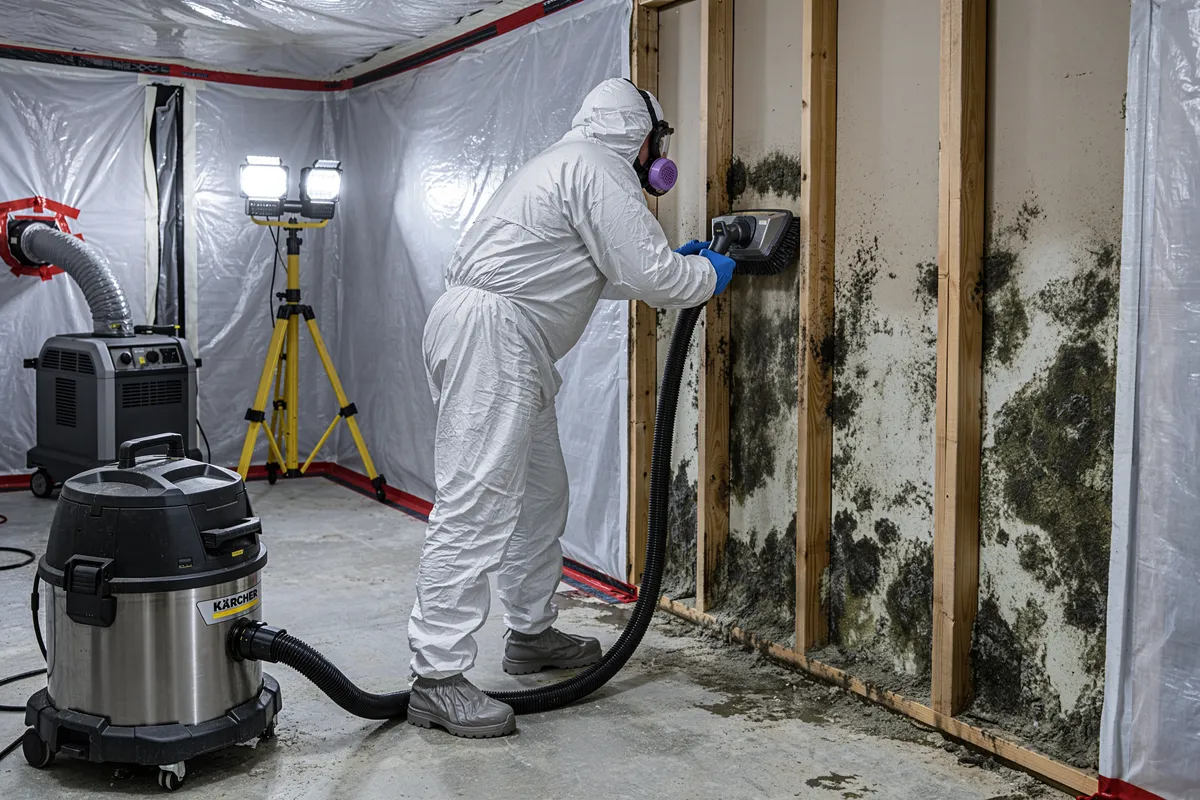
Black mold is removed like any indoor mold: fix the water, contain the area, remove what cannot be cleaned and dry the rest. Call the number on this page to be connected with a local mold company in Santa Monica.
Does the Color Matter?
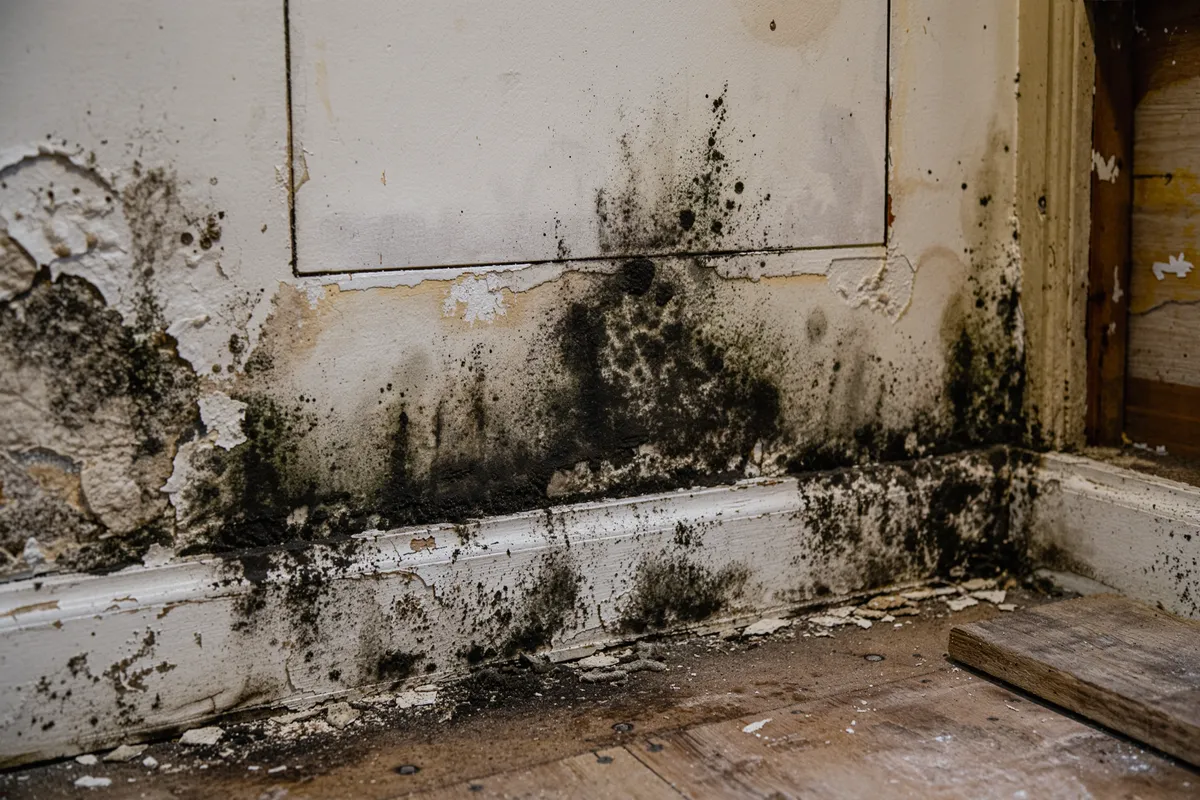
Many people assume black means the worst kind. It does not. Mold shows up green, gray, brown or black depending on the surface and how long it has been wet, and one patch can change color across a wall. What counts is the size of the area and what got wet. So the useful question is always what got wet, and for how long.
Where the Moisture Comes From
Southern California is dry most of the year, so dark mold here usually has a specific cause: a pinhole supply-line leak, a failing water heater, a slab leak, a roof leak during a winter storm, or a shower that never gets ventilated. Fix that cause first; everything else follows. Tracing each case to its water source is half the work.
Much of the housing in Santa Monica dates to the 1960s. Original plumbing, aging roofs and past wall repairs make slow leaks, and the dark growth that follows, more common.
Near the coast, marine layer fog and damp ocean air keep surfaces from drying, so dark growth around windows, sliders and north-facing walls is common.
Why Two Quotes Can Differ
One company may plan to clean and dry a wall, another may plan to cut out and replace drywall. The difference usually comes from what each found with moisture readings. Ask each to describe the area, the method and what happens after the mold is gone. A walkthrough usually settles most of these differences.
Moving Furniture and Belongings
Before the visit, clear a few feet around the affected wall and take valuables out of the room if you can. Hard items can usually be wiped; soft items such as couches, rugs and mattresses that sat near heavy growth may need separate cleaning or disposal. Ask in advance what the plan is for anything that must be discarded.
Permits, rentals and contractor checks in Santa Monica
There is no California mold license to look up. What you can check is the company's CSLB contractor license, which state rules require once a job reaches $1,000 in combined labor and materials.
Remediation itself is cleanup, but putting the room back together can be permitted work; ask the contractor whether the City of Santa Monica Building and Safety Division needs to be involved.
If a landlord won't deal with a leak or mold, the City of Santa Monica Building and Safety Division takes housing complaints for addresses in Santa Monica.
Companies that take calls here usually also work in Venice, Marina Del Rey and Playa Vista.
Outside the House
Mold often starts at the exterior. Keep gutters and downspouts clear, check that soil and irrigation slope away from the foundation, and look for stucco cracks and failed caulking at window frames. Rain and sprinklers that reach the wall base are common causes of dark growth inside. Look at the wall behind the toilet and the base of the shower too.
Black Mold Removal questions in Santa Monica
Is black mold more dangerous than other mold?
Does painting over black mold work?
How do I choose a company without a state mold license?
Does rebuilding after removal need a permit?
More mold services in Santa Monica
Black Mold Removal nearby
Helpful guides
Sources
- City of Santa Monica Building and Safety Division
- City of Santa Monica Building and Safety Division: housing complaints
- CSLB: What kind of contractor do you need?
- California Health and Safety Code 17920.3
- EPA: A Brief Guide to Mold, Moisture and Your Home
- California Department of Public Health: Mold
- Santa Monica housing by year built
Last updated: