Most visits take an hour or more. Expect questions about leaks, repairs and when you first noticed the problem. Call the number on this page to be connected with a local mold company in Long Beach.
After a leak or a burst pipe
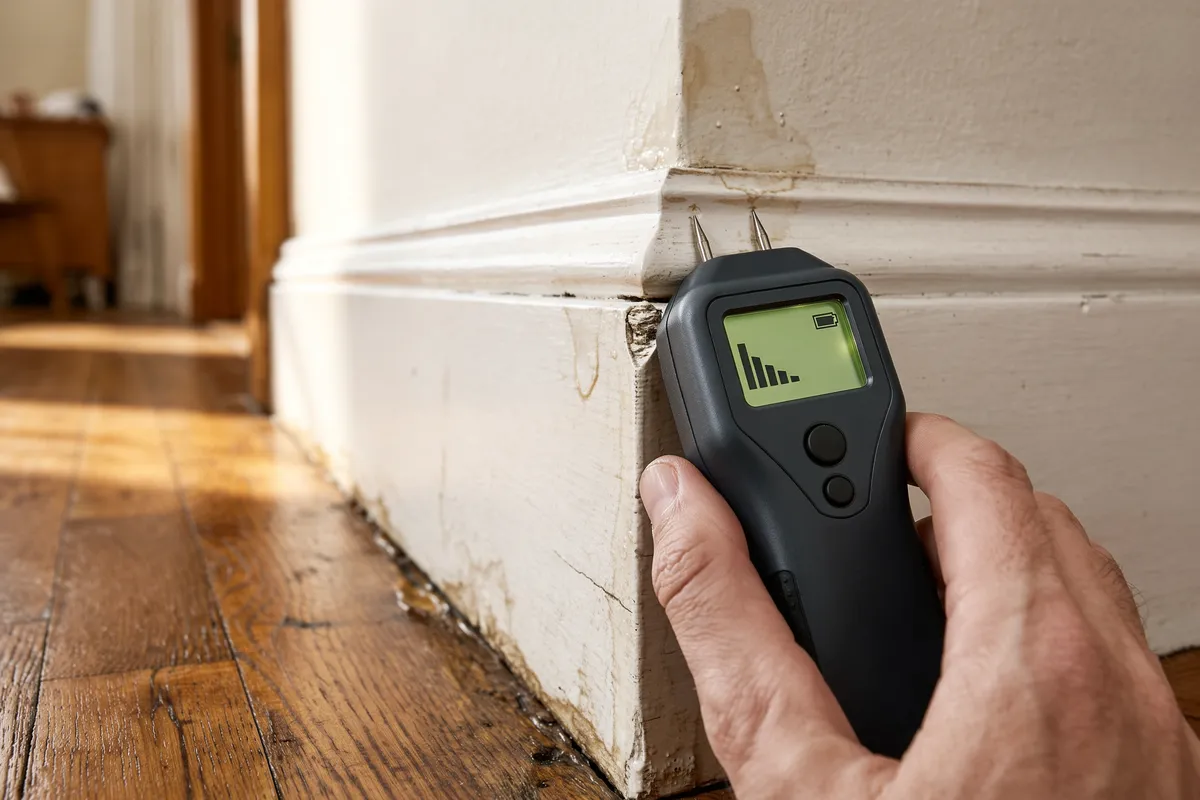
Water that sat in a wall or under flooring may not look like much. EPA advises drying wet materials within 24 to 48 hours. If that window has passed, an inspection shows whether anything stayed damp enough to support growth. The visit also checks neighboring rooms, since water rarely stays in one place.
Attics, crawl spaces and mechanical rooms
Hidden spaces usually hold the clues. The inspector looks at roof decking, insulation, ducts, air handlers, water heaters and raised-foundation framing. These are the places where condensation, slow drips and poor ventilation tend to build up unnoticed. Notes on air flow and humidity in each space are usually included.
Close to the beach, the marine layer and foggy mornings add damp air to indoor humidity, and inspectors measure window condensation and ventilation as well as leaks.
With much of the housing in Long Beach dating to the 1950s, inspectors pay close attention to aging supply lines, original stucco and the roof edges where water likes to sneak in.
Verifying the company
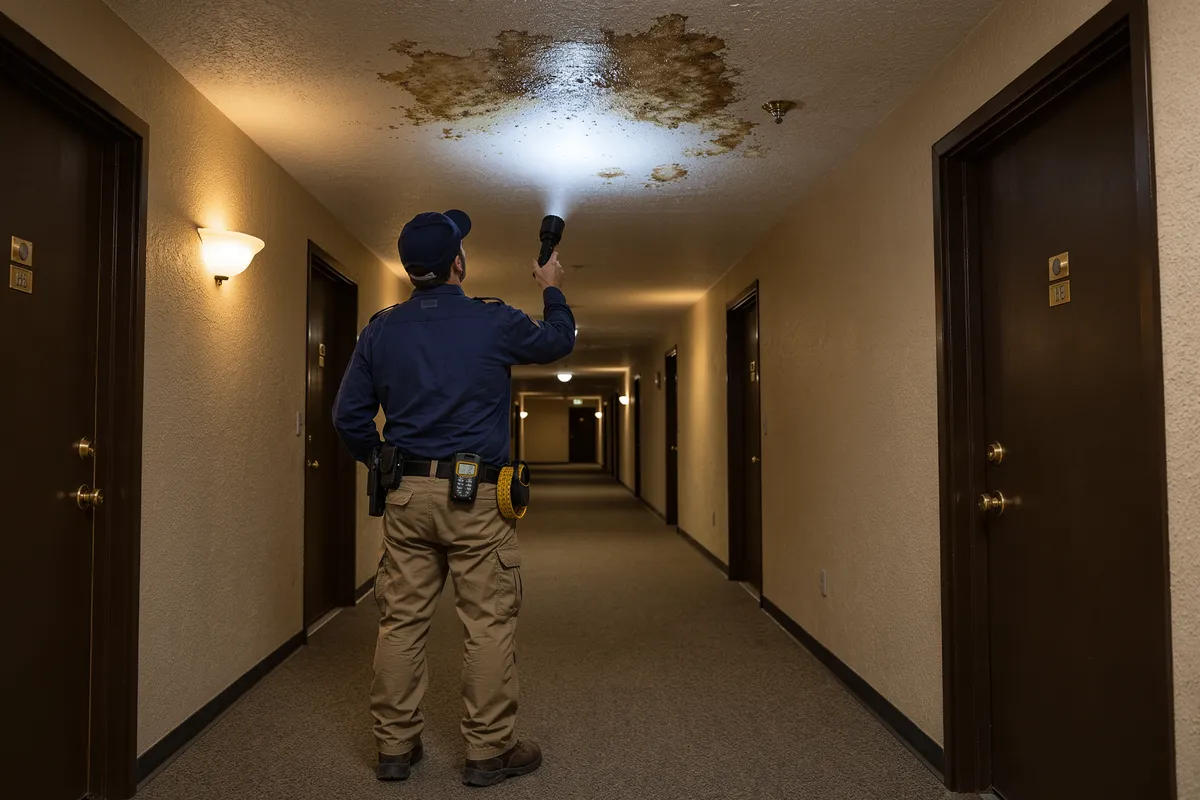
California issues no mold-specific license. Ask what training the inspector has, request references, and if the business also does repairs on larger jobs, look up its CSLB license on the state website before you agree to anything. Honest answers to these questions are a good sign.
Before work starts in Long Beach
California has no separate state license for mold assessors or mold remediators, so the useful check is the contractor license: the Contractors State License Board (CSLB) requires one for jobs of $1,000 or more in labor and materials, and its online lookup shows the status.
If the job grows into replacing drywall, cabinets or framing, ask whether the rebuild needs a permit from the City of Long Beach Building and Safety Bureau.
Renting? State law counts visible mold growth, beyond minor mold on surfaces built to get wet, as a substandard-housing condition; the city's code enforcement office is the place to ask about a complaint.
Companies that take calls here usually also work in Signal Hill, Lakewood and Carson.
Questions to ask the inspector
What training does the inspector have? Who does the work at the property? Will you get photos and readings? Will the report name a likely source? Can it be shared with a remediator, insurer or buyer? Clear answers up front prevent confusion later. Answers that are vague or defensive are worth noting before you hire anyone.
Cut off the moisture source quickly
If water is still coming in, stop it first. Shut off a leaking supply line, tarp a damaged roof area or divert runoff from the wall. An inspection works best when the cause is no longer adding new moisture. Document what you did and when, since it may matter for a claim or a landlord.
Around Long Beach
Calls come in from across Long Beach, including around Belmont Shore, Naples, The Peninsula.
About 78.6% of homes were built before 1980 and 58.8% of occupied units are renter-occupied.
Mold Inspection questions in Long Beach
What does an inspector look for?
Do I need one if I can see mold?
Can I use the report for insurance?
Does humidity matter?
More mold services in Long Beach
Mold Inspection nearby
Helpful guides
Sources
Last updated: