Mold in this part of Southern California usually traces to plumbing leaks, winter roof leaks, drainage against foundations, AC condensate or coastal damp air. Northridge callers can reach local companies for inspection, testing, removal and final checks. Call the number on this page to be connected with a local mold company in Northridge.
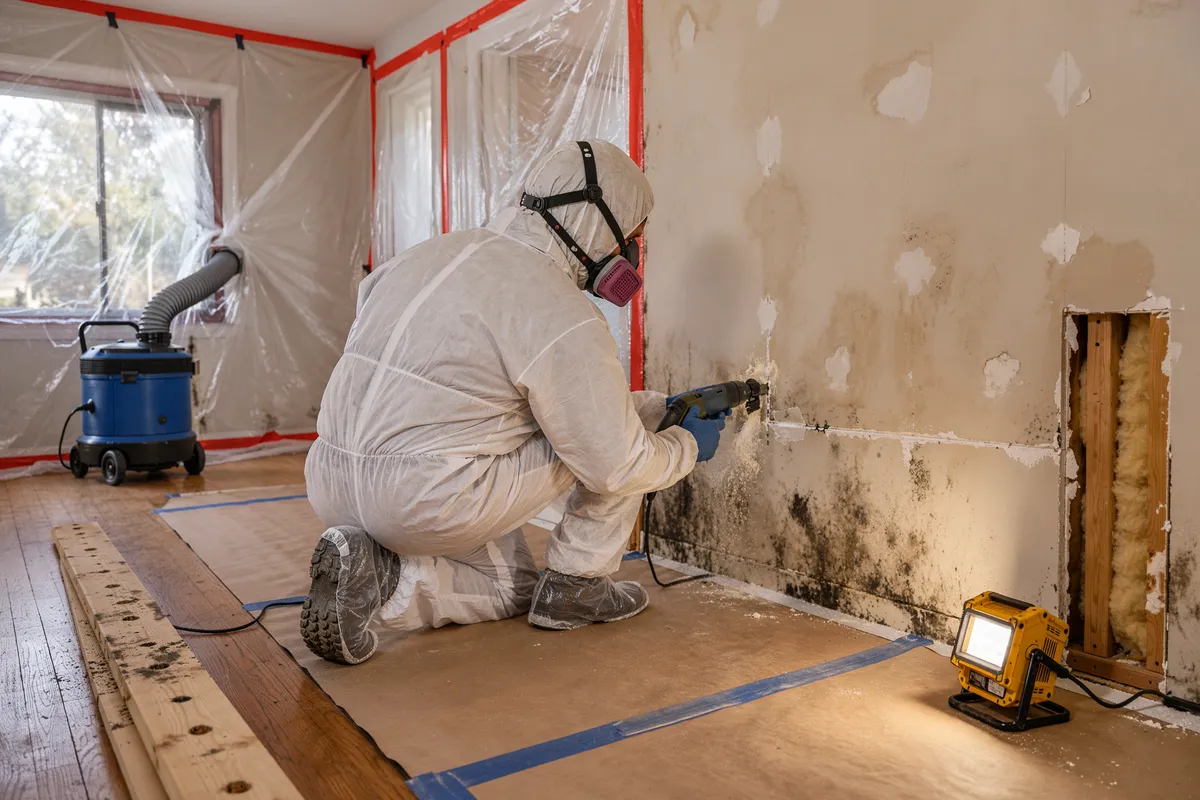
Mold services in Northridge
Before and after the cleanup
Mold help does not end with removal. Companies near Northridge also take calls about inspection before the work starts and clearance testing after it finishes, so the walls are not closed over a problem. Mention which stage you are at, and the call goes to the right place. Ask whether the company coordinates with the assessor or leaves that to you. Say if you plan to repaint or remodel soon, since timing affects the order.
Raised foundations and slabs
- Older homes on raised foundations can get damp crawl spaces
- Slab homes hide leaks in pipes under the floor
- Stucco and wood framing trap water behind walls
- Attics collect heat and duct sweat
Each type of house hides moisture in its own way. A hygrometer from a hardware store shows which rooms stay damp. Mold on window frames can be a sign of condensation, not only leaks.
Valley heat around Northridge means months of AC use. A clogged drain line or sweating duct in the attic can wet insulation and ceilings quietly.
Local details for Northridge
There is no California mold license to look up. What you can check is the company's CSLB contractor license, which state rules require once a job reaches $1,000 in combined labor and materials.
Remediation itself is cleanup, but putting the room back together can be permitted work; ask the contractor whether the Los Angeles Department of Building and Safety needs to be involved.
If a landlord won't deal with a leak or mold, the Los Angeles Housing Department takes housing complaints for addresses in Northridge.
Nearby, the same kind of help is available in Canoga Park, Reseda and North Hills.
What to have ready
A few details help: what you see or smell, where it is, whether there was a leak or storm, whether the AC is involved and whether you own, rent or manage the property. Photos are useful later. You do not need technical terms, and a plain description is plenty. Photos of labels on equipment, such as the water heater, can help. If you manage a building, mention how many units are affected.
Insurance and paperwork
If a claim is involved, ask your insurer what documents it wants before work starts: photos, moisture readings or an inspector's report. Keep invoices, the written plan and any final check. Policies treat mold differently, so read yours or ask your agent instead of assuming. Ask whether the claim adjuster needs to see the scope before work begins. Do not pay a large deposit before reading the written scope.
Before you sell, buy or rent
Mold surfaces during home sales and rental turnovers, often as a ceiling stain or a smell during a walkthrough. An inspector's report and a clean clearance result can answer a buyer's or tenant's questions. Call before a deadline gets close, because fixing moisture and drying take time. Share the date of the purchase or lease with the company, if relevant. Check closets, behind furniture and the inside of cabinets under sinks.
Common questions in Northridge
Does a musty smell mean there is mold?
What should I do after a leak or storm?
Can mold grow in my AC or ducts?
Does calling commit me to hiring anyone?
Nearby cities and towns
Sources
Last updated: